Pan Base Metrology and Dimensional Clearances
Selecting an effective reusable silicone baking mat requires looking past marketing claims of universal fit and examining physical dimensions, core substrate reinforcement, and application design. Commercial baking pans in North America typically adhere to the standard half-sheet format of approximately 330 by 457 millimeters (13 by 18 inches), whereas international and countertop convection ovens commonly rely on 300 by 400 millimeter trays.
Placing an oversized mat into a smaller tray forces the edges up the sidewalls, creating pooling zones for oils and causing uneven heat distribution. Conversely, an undersized mat exposes pan surfaces to scorching and carbonized grease. I analyze these specifications through a technical lens, auditing factory metrics against actual kitchen utility.
- North American standard half-sheets measure approximately 330 by 457 millimeters (13 by 18 inches).
- Countertop convection and metric trays commonly standardize around 300 by 400 millimeters.
- Placing a 300 by 400 millimeter mat in a North American half-sheet leaves 50 millimeters of exposed pan length.
Critical Engineering Criteria for Silicone Liners
Substrate Reinforcement
Internal woven fiberglass mesh stabilizes food-grade silicone against thermal expansion, ensuring flat placement and uniform heat dispersion across metal sheets.
Pan Base Tolerances
Liners must rest flat on the interior floor of the tray. Measurements must target the bottom cooking surface rather than the flared outer pan rim.
Surface Permeability
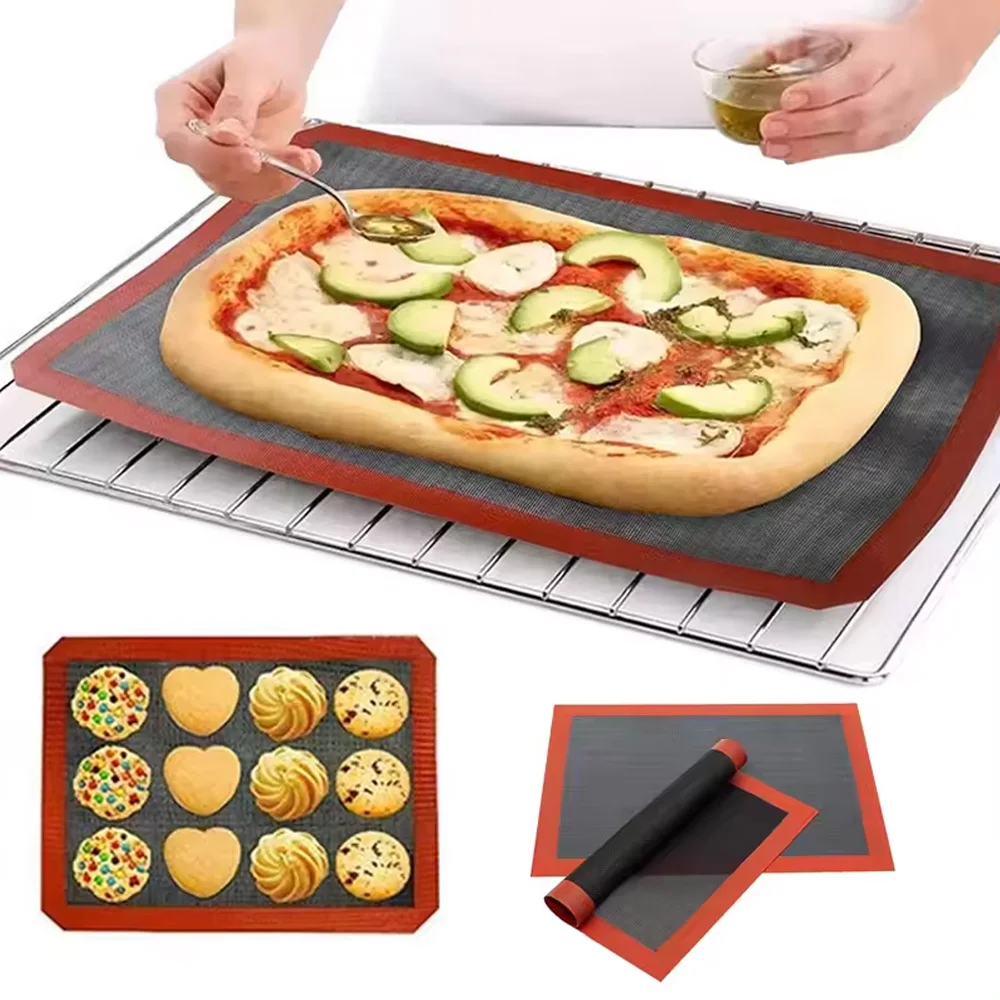
Perforated mesh vents bottom moisture for crisp pastry bases, whereas solid continuous polymer coats retain liquids for roasting and wet doughs.
Transit Logistics Impact
Fiberglass filaments fracture permanently if folded sharply. Tube-rolled or flat delivery packaging is critical to preserving structural durability.
Dimensional and Construction Specifications
| Product | Dimensions & Profile | Substrate Construction | Application Scope |
|---|---|---|---|
| Silicone Baking Mat Sheet 30x40cm Reusable Baking Cookie Sheet… | 300 x 400 mm solid flat sheet | Woven core with solid silicone exterior | Metric tray general roasting and cookie baking |
| 1pc 30X40cm Perforated Silicone Baking Mat Reusable Non-stick… | 300 x 400 mm micro-perforated sheet | Perforated open-pore fiberglass mesh | Pastry, macaron, and bread crust dehydration |
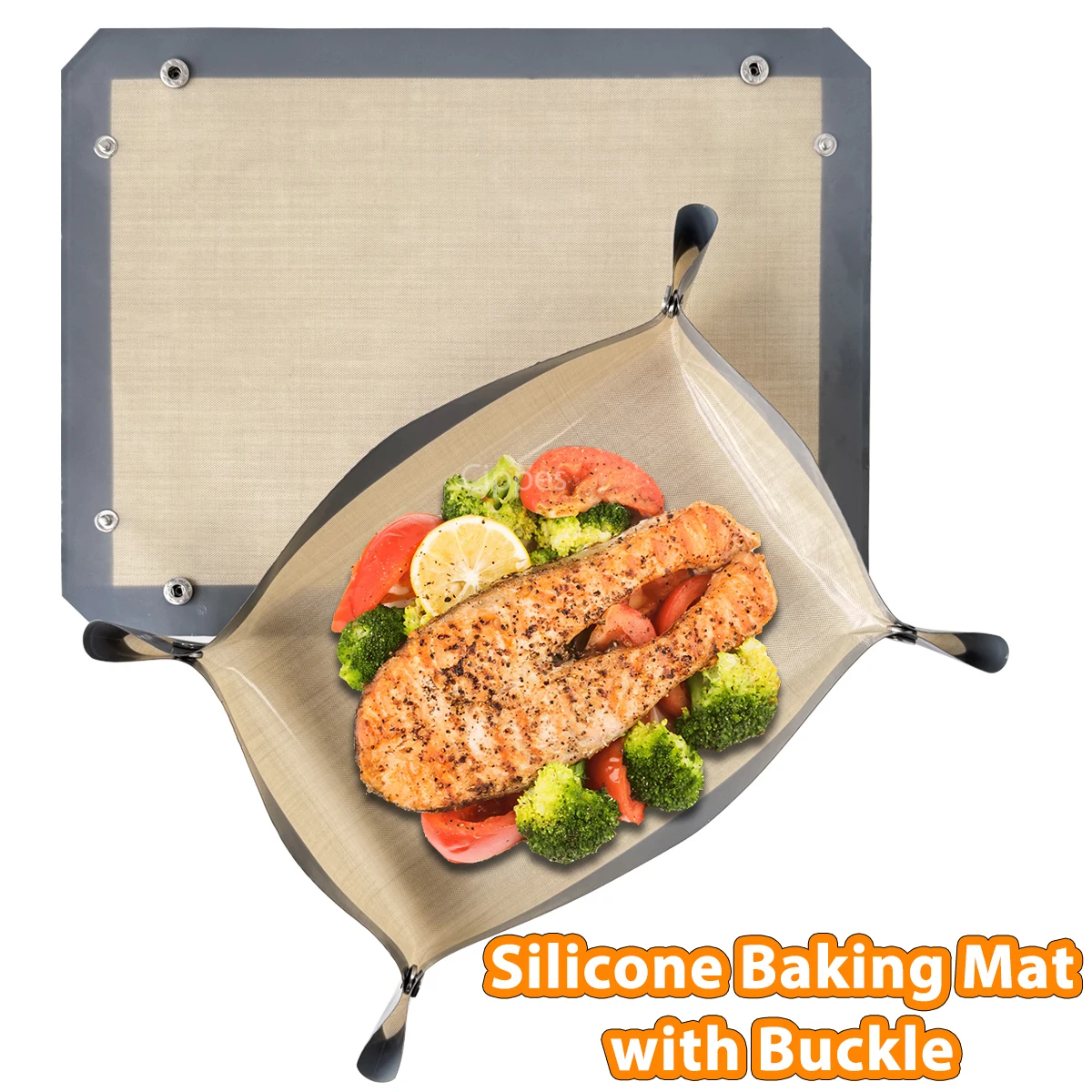
| 1PC Silicone Fiber Baking Mat with Buckle, Reusable Corners… | Convertible flat sheet with corner snaps | Woven silicone fiber with corner buckles | Self-supporting leakproof roasting tray |
| Silicone Bread Sling for Dutch Oven, Reusable Baking Mat with… | Round landing sling with elongated tabs | Heat-resistant silicone with handle extensions | Cast-iron Dutch oven transfers up to 230°C |
| Reusable Air Fryer Silicone Liners Square Non Stick Basket Mat… | Square profile for 4-7QT appliances | Molded non-stick flexible silicone polymer | Convection air fryer and microwave basket lining |



Format Selection Summary
Match internal pan base clearances directly against continuous thermal requirements and moisture venting needs.
Solid sheets prevent tray staining from roasted fats, while perforated designs dehydrate pastry bases. Specialized geometries like slings and corner buckles serve dedicated vessels.
Pre-Purchase Dimensional and Logistics Checklist
- Measure Interior FloorVerify base floor length and width instead of the outer rim flare.
- Check Packaging MethodEnsure shipment arrives rolled or flat to prevent fiberglass filament fracture.
- Evaluate Surface PermeabilityConfirm whether your recipe requires liquid barrier protection or steam venting.
- Verify Appliance ClearancesEnsure handle extensions or corner folds fit within target vessel walls.
Auditing Methodology and Data Sources
Known facts
Specifications cataloged across 7,688 aggregate customer review logs.
Dimensional analyses audited against 330x457 mm and 300x400 mm tray standards.
Sling thermal parameters assessed against 230°C Dutch oven benchmarks.
Analysis
Desk-based cross-border marketplace audits reveal recurring fulfillment creasing when flexible fiberglass sheets are shipped in flat poly-mailers.
Dimensional mismatch remains the primary cause of uneven heat transfer and corner curling.
Uncertainties
Variations in unbranded factory silicone layer thickness across batches.
Absence of uniform standardized testing for composite corner buckle durability under repeated heating cycles.
Inherent Material and Performance Constraints
- Silicone acts as a thermal insulator, slowing rapid heat transfer and reducing bottom crust browning compared to bare aluminum.
- Silicone sheets absorb cooking fats over repeated heat cycles, requiring targeted degreasing washes.
- Direct blade contact severs the silicone sheath and damages internal woven fiberglass, making the mat unfit for food contact.
Frequently Asked Technical Questions
Can perforated silicone mats be used for roasting savory proteins?
No. Rendered animal fats and marinades weep through the perforations directly onto the aluminum tray beneath, causing severe carbonization and smoking.
Why does a 300 by 400 millimeter mat not completely cover a standard half-sheet pan?
North American half-sheets measure approximately 330 by 457 millimeters. A 300 by 400 millimeter mat leaves roughly 50 millimeters of exposed bare pan along the length.
What happens if a fiberglass-reinforced silicone mat is folded sharply?
Sharp folding permanently fractures the interior glass fiber matrix, creating weak lines, tearing points, and potential food-contact contamination.